








ChatGPT Go completed its global rollout last week, bringing the $8-a-month subscription everywhere ChatGPT operates. But that’s not all. OpenAI announced it’s testing ads in the US for free and Go users starting in the coming weeks. This marks a major shift for a company that CEO Sam Altman once said found ads “uniquely unsettling” when combined with AI.
The Go tier launched in India back in August 2025 at INR399 per month and quietly expanded to 170 countries before hitting the US on January 16. It offers 10x more messages, uploads, and image generation than the free tier, plus access to GPT-5.2 Instant with longer memory. At $8 monthly, it sits between free ChatGPT and the $20 Plus subscription. This push positions Go as one of the most affordable AI subscriptions worldwide, with localized pricing in some markets.
The Ad Test Everyone’s Watching
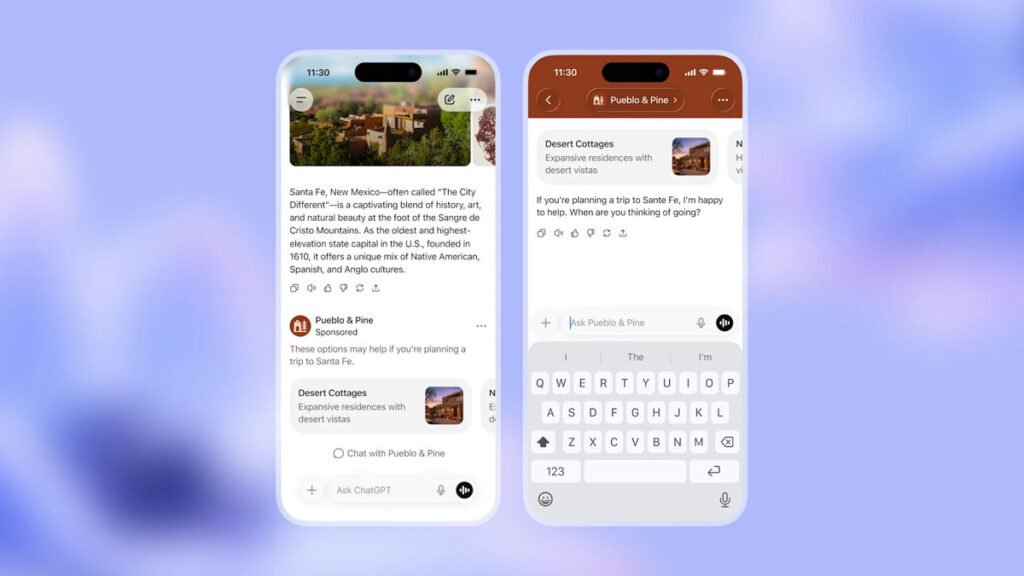
A more affordable ChatGPT subscription is a good thing, but here’s the bad news. OpenAI has also announced it will start testing ads with logged-in US adults on free and Go tiers in the coming weeks. Ads appear at the bottom of responses with “Sponsored” labels when there’s a relevant product tied to your conversation. Planning a vacation? Expect hotel deals. Plus ($20), Pro ($200), Business, and Enterprise users stay ad-free.
OpenAI promises ads won’t influence ChatGPT’s answers and they’ll never sell your data to advertisers. You can opt out of personalized targeting or dismiss individual ads. No ads will show for users under 18 or near sensitive topics like health, mental health, or politics. Still, reactions are mixed. Some users see it as a fair trade for free access, while others worry it could erode trust if ads feel intrusive or biased.
The strategy makes sense financially. With 800 million monthly users and over $1 trillion committed to AI infrastructure by 2030, OpenAI needs more revenue streams that go beyond subscriptions. Ads will help OpenAI reach a broader audience, while the Go tier targets emerging markets where affordability matters. However, competitors like Google’s Gemini and Anthropic’s Claude remain ad-free for now, so OpenAI’s walking a tightrope between monetization and user experience. If ads feel too pushy, people will bounce to rivals. If done right, it could reshape how AI companies balance accessibility with profitability.