








For years, the story around ChatGPT and school has been simple: kids use it to skip their homework. Well, not anymore. OpenAI has launched ChatGPT for Teens, a new version built for 13 to 17-year-olds. It’s designed to steer them toward actually learning the material instead of just copying an answer.
If you have a teenager who already uses ChatGPT, or you suspect they do, this is worth knowing about. A lot of parents assume there’s nothing they can do about AI and homework shortcuts. This is OpenAI’s answer to that concern.
How ChatGPT for Teens handles homework differently
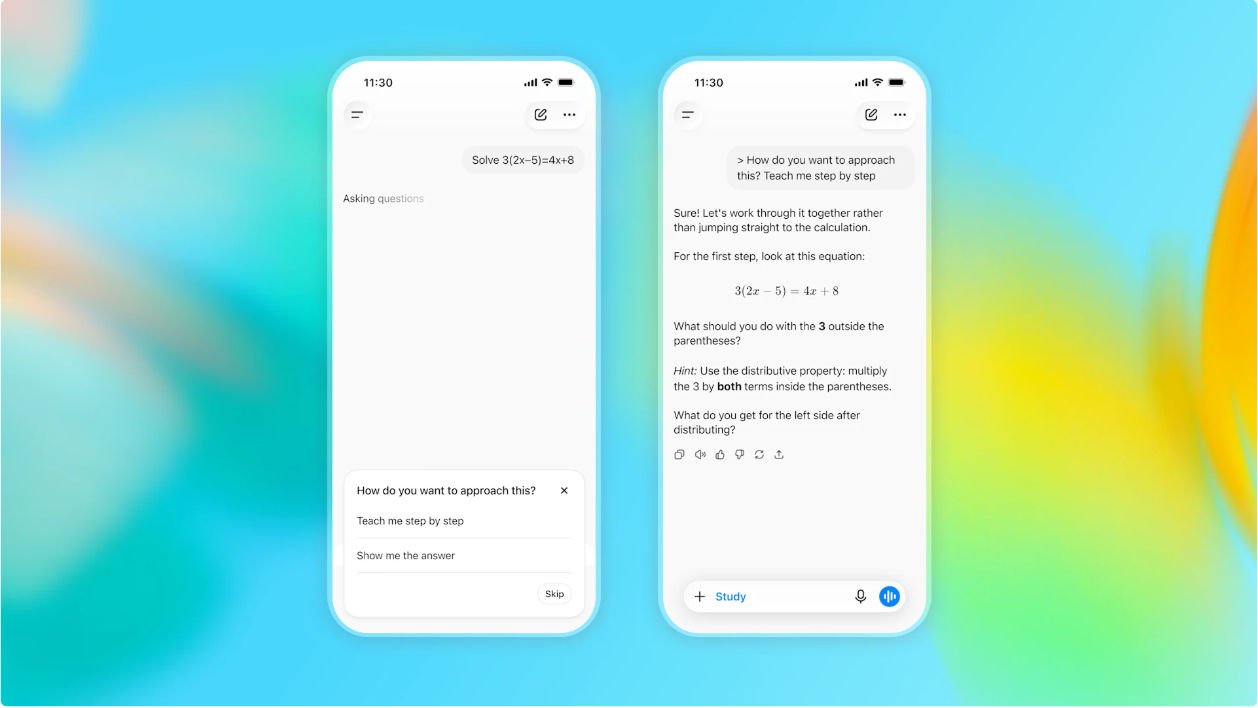
The new version leans on something called Study Mode, which acts more like a tutor than an answer machine. Instead of solving a math problem outright, it walks a student through the steps needed to solve it themselves.
There’s also a feature called the Responsible Homework Reminder. It kicks in if ChatGPT detects a teen trying to shortcut an assignment instead of learning it. Rather than spit out a finished answer, the tool redirects them toward a more interactive approach. Parents and teens can also turn on Study Hours, which keeps Study Mode active by default during set times.
What else changes for teens
Teen accounts come with stronger content protections than the regular version of ChatGPT. That includes added safeguards around self-harm, violence, and other sensitive topics. ChatGPT is also barred from using romantic language or claiming to have feelings. OpenAI says the change is meant to reduce the odds of a teen forming an unhealthy emotional attachment to the chatbot.
Parents are also getting access to their tools too. For instance, linked accounts can set Quiet Hours that limit when a teen can use the app. Parents can also adjust settings and receive safety notifications in certain situations.
This launch comes as OpenAI faces lawsuits from families who say ChatGPT played a role in harm to their teens. That includes one wrongful death case. The company has been adding safety features gradually since last year. This teen-specific version is its biggest step yet.
Any user who says they’re between 13 and 17 gets automatically placed into this experience. OpenAI also uses an age-prediction system to catch teens who don’t disclose their age. If you’re a parent, it’s worth checking whether your teen’s account has these protections turned on.